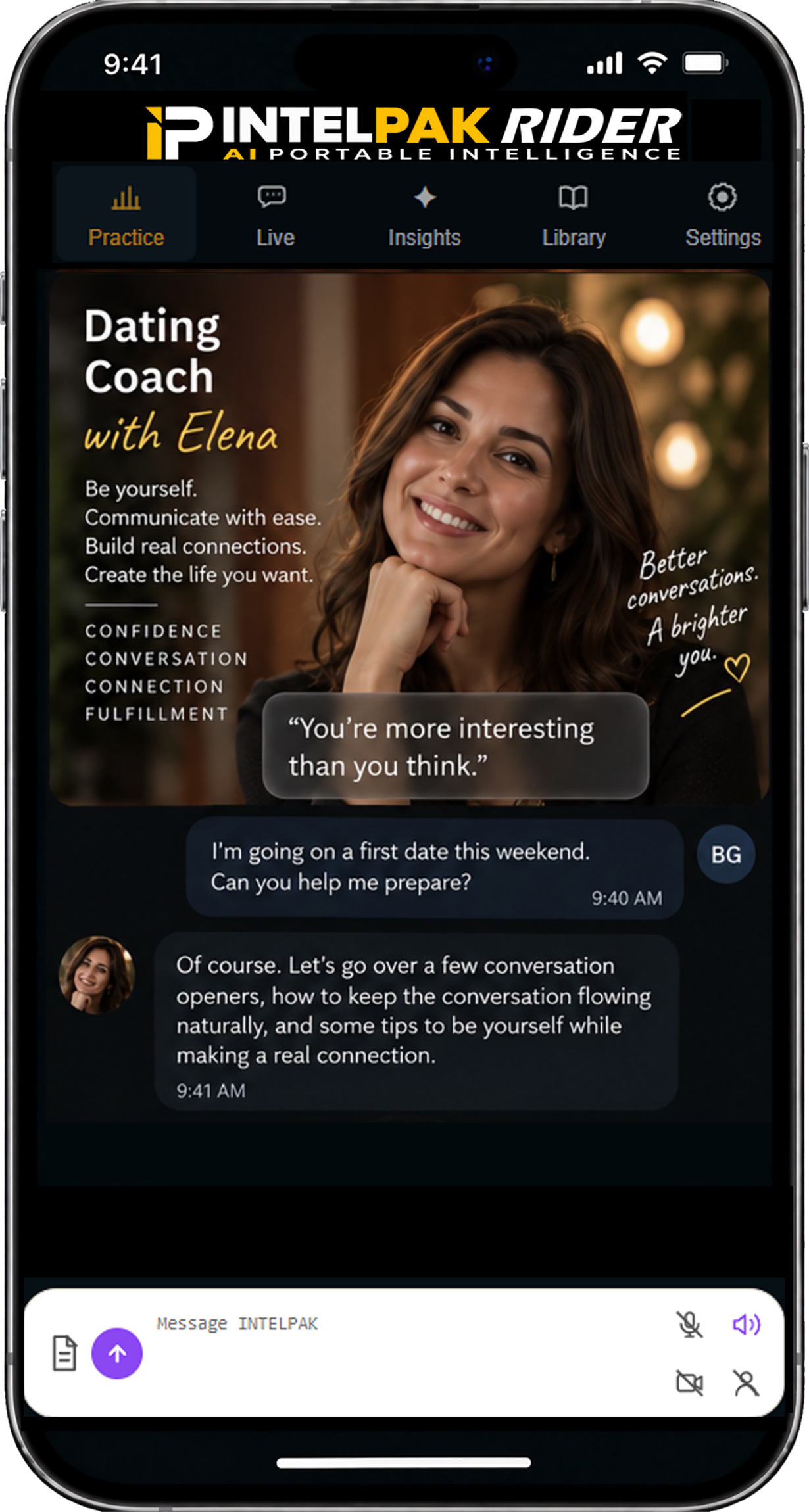
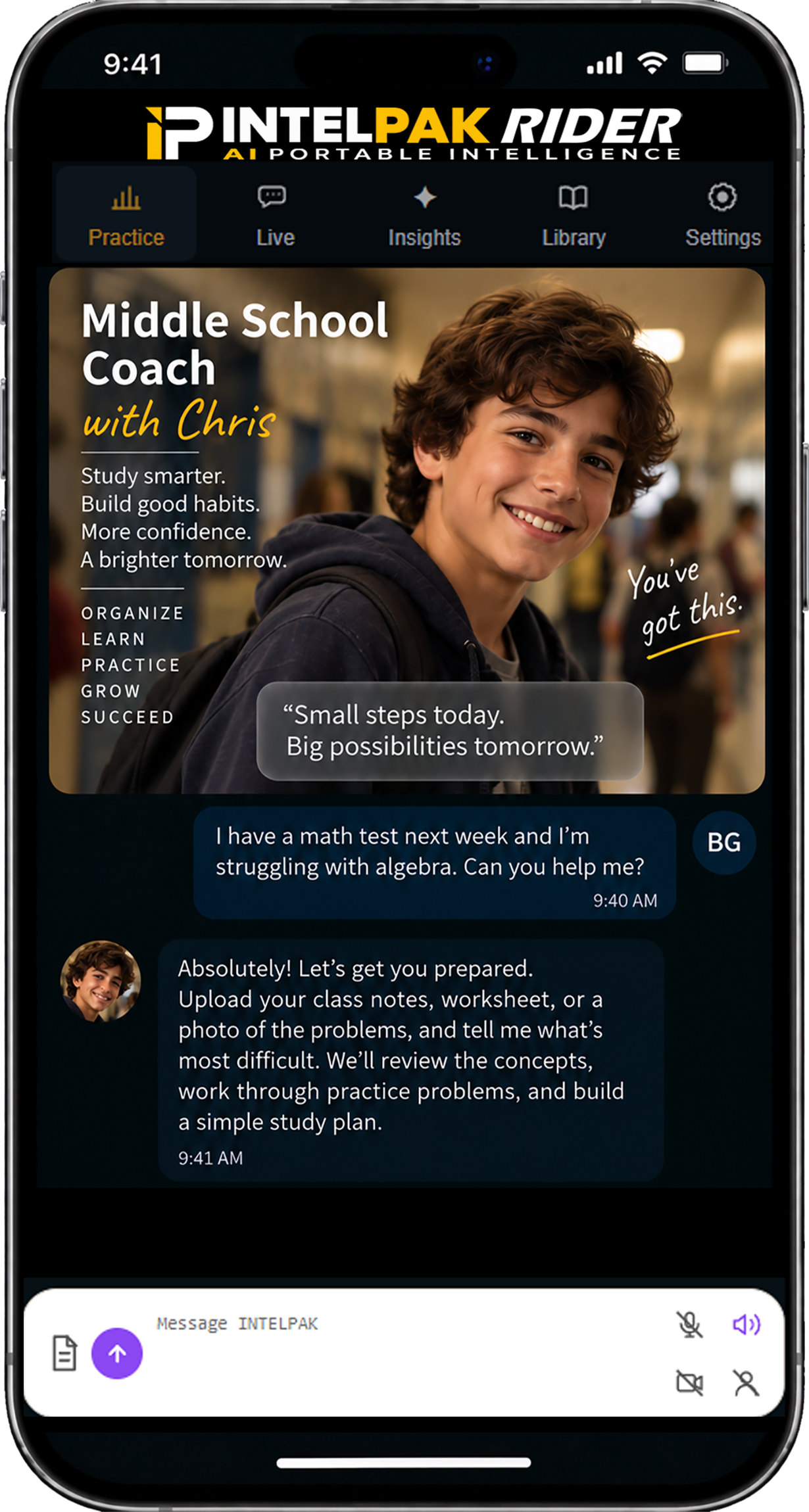
You don’t need to commission a giant AI system for hundreds of millions. You assemble the intelligence you need. Add an IPK. Remove one. Create your own. Combine expertise. Use Practice today and Assist tomorrow. Change the AI underneath it. Use a phone, browser or desktop. Build something for 10 employees or 10,000. Build it today with IPK to survive changes in models and technology.
The IPK becomes the Lego brick of your collective intelligence.

AI models are getting more powerful, more plentiful and easier to replace. What they do not automatically contain is the judgment your organization has earned: how your best people recognize risk, make decisions, handle difficult situations, serve clients, sell, negotiate, teach and lead.
IntelPak separates that valuable intelligence from the model. Package it once. Review it. Control it. Use it across Practice, Assist and future AI experiences without rebuilding your institutional knowledge every time technology changes.
AI is becoming abundant. Your collective intelligence is not.
IntelPak carries forward a lesson learned three decades ago as part of the Concordance development team: technology changes. Good architecture survives it.
Concordance helped define a generation of legal technology, and its core paradigm endured while the computers, networks and software around it changed. IntelPak applies that same discipline to AI.
Your intelligence should never be trapped inside today’s model, today’s vendor or today’s technology. Build your collective intelligence once. Keep it in IPKs you control. Change the technology underneath it as the world changes.
IntelPak is already designed for the newest generation of AI experiences, including leading frontier models and Tavus human-like PALs, with an architecture ready to embrace emerging decision models such as Jev and what comes next.
LLMs today. New models tomorrow. AGI when it arrives. Your IPKs remain yours.
Build the intelligence. Let the technology evolve.
Already using ChatGPT, Gemini, Copilot, Harvey or another AI platform? Good. IntelPak does not ask you to throw it away. An IPK gives the AI you choose a controlled body of your own knowledge, methods and judgment.
Today’s model will not be tomorrow’s model. Your organization should not have to start over whenever the technology changes. Build your intelligence today so it can move with you.
The experience is deliberately simple. The intelligence behind it can be as specialized as the expert who created it.
Kirkland & Ellis has set aside $500 million to develop proprietary AI technology. The firm says the goal is to put the collective experience and judgment of its leading partners at every Kirkland lawyer’s fingertips. Roughly 250 lawyers, including about 100 partners, have contributed to the effort.
The important part is not the size of the budget. It is what Kirkland has decided is worth protecting and scaling: the knowledge and judgment of Kirkland itself.
Kirkland also says technology will keep evolving. Its strategy is therefore not simply to bet on one model. It is building systems intended to compound its institutional knowledge over time.
You do not need Kirkland’s budget to pursue the same strategic idea.
IntelPak lets organizations package their own collective intelligence now.
Market references: Kirkland & Ellis AI & Innovation; Financial Times reporting republished by Kirkland, May 2026.
In September 2026, Morgan & Morgan committed at least $1 billion over the next decade to technology and AI built around the firm’s own knowledge, experience, workflows, and judgment. In doing so, it published something close to a manifesto for proprietary expertise as the competitive moat.
Its founder, John Morgan, put the idea plainly: “The law firms that survive and lead will be the ones that don’t just license an AI tool, but whose attorneys inform the AI models with their own knowledge and experience.”
Morgan & Morgan has already spent about $300 million developing MX2 and announced a $1 billion technology and AI commitment over the next decade. The scale is exceptional. The strategic idea is increasingly universal: proprietary knowledge becomes more valuable when AI can put it to work.
IntelPak’s answer is fundamentally different:
You don’t need to build MX2. You need to package what you know, own it, and make it usable with the AI you choose.
Morgan & Morgan says MX2 is expected to open to qualifying outside law firms in late 2027, moving from internal proprietary intelligence toward a commercial platform. IntelPak begins from the opposite direction: it is architected so experts and organizations can create their own intelligence rather than waiting for a platform owner to encode their vertical for them.
That is why IntelPak Studio matters. Studio is the democratization layer: the place where source material, methodology, experience, and human judgment become structured, portable Intelligence Packs that can be deployed across organizations and AI environments.
Market reference: Morgan & Morgan, MX2, September 2026.
Visa’s AI governance hiring is another signal of the same enterprise challenge: organizations need people and systems that translate institutional requirements, knowledge and judgment into practical AI use. IntelPak turns repeatable expert knowledge into a reusable intelligence layer instead of leaving every employee to rediscover it from scratch.
The role points beyond legal AI. Large enterprises are looking for ways to turn scarce expert judgment, governance requirements, playbooks, decision criteria, and training into systems that can operate at scale while preserving human oversight.
Market reference: Visa, Director, Data and AI Governance, September 2026.
IntelPak sits between the materials professionals already use and the AI systems now reshaping their work. It is designed to ingest protected knowledge, apply a privacy and privilege firewall, preserve human review, and compile approved expertise into deployable intelligence.
IntelPak turns protected professional knowledge into deployable intelligence packages and LLM-ready operating assets.
These are different applications of the same idea: specialized human knowledge made conversational, contextual, and usable when someone needs it. And this is only the beginning, with many more IPKs already in development.

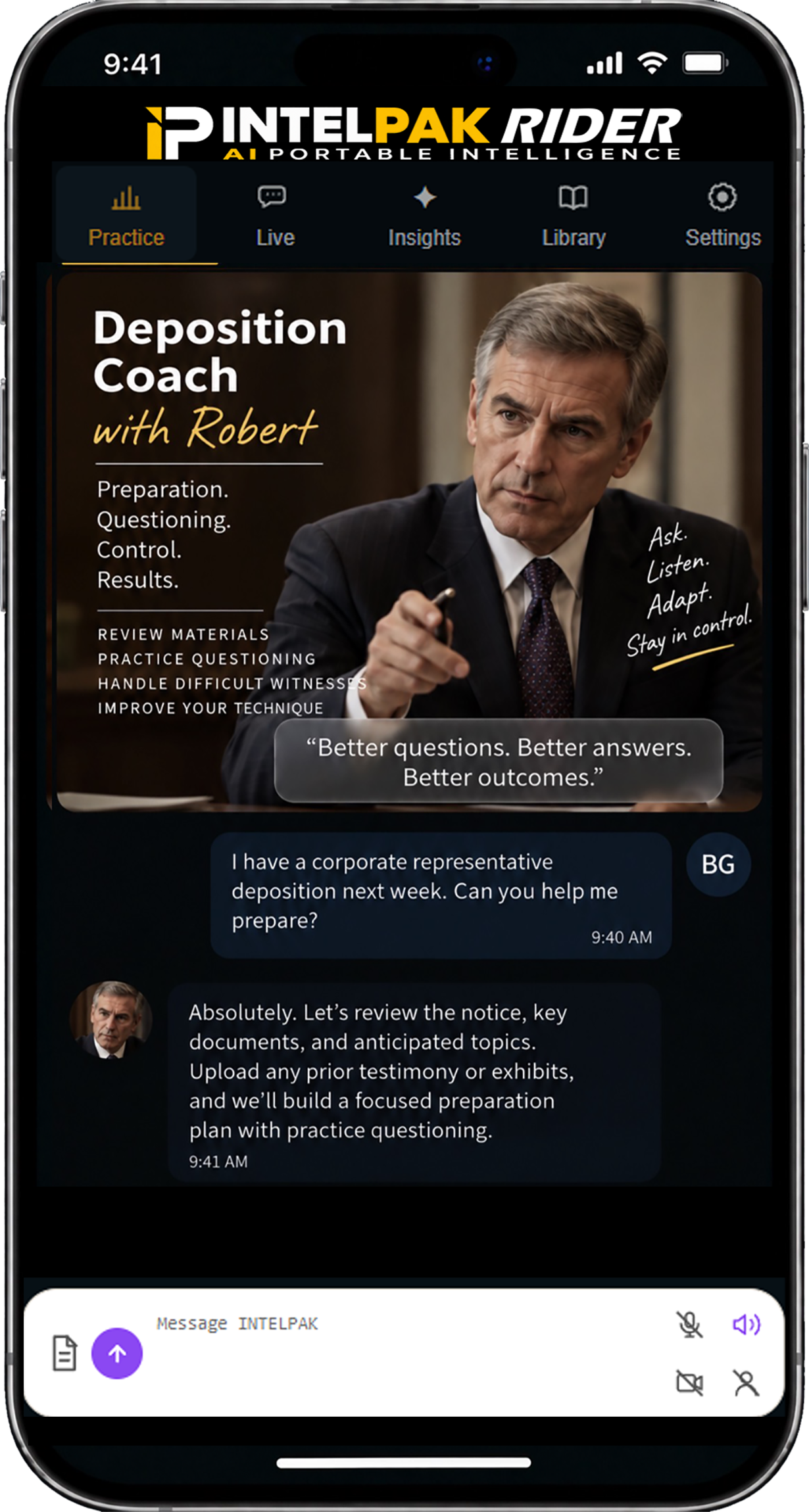
Prepare deposition strategy, anticipate difficult testimony, and rehearse questions, objections, and follow-ups before going on the record.

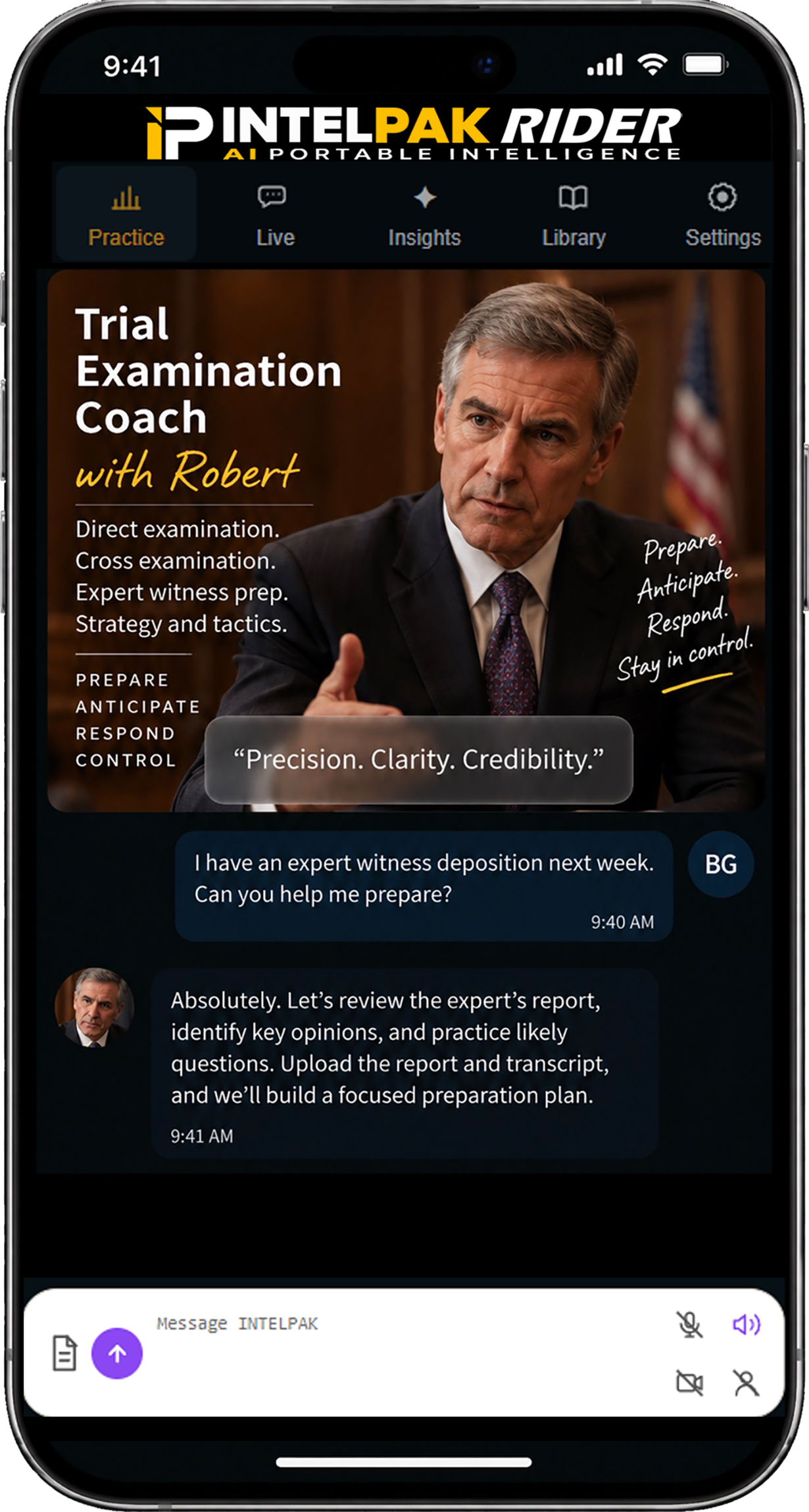
Build and practice direct and cross-examinations with structured questioning strategy, witness control, and courtroom-ready phrasing.

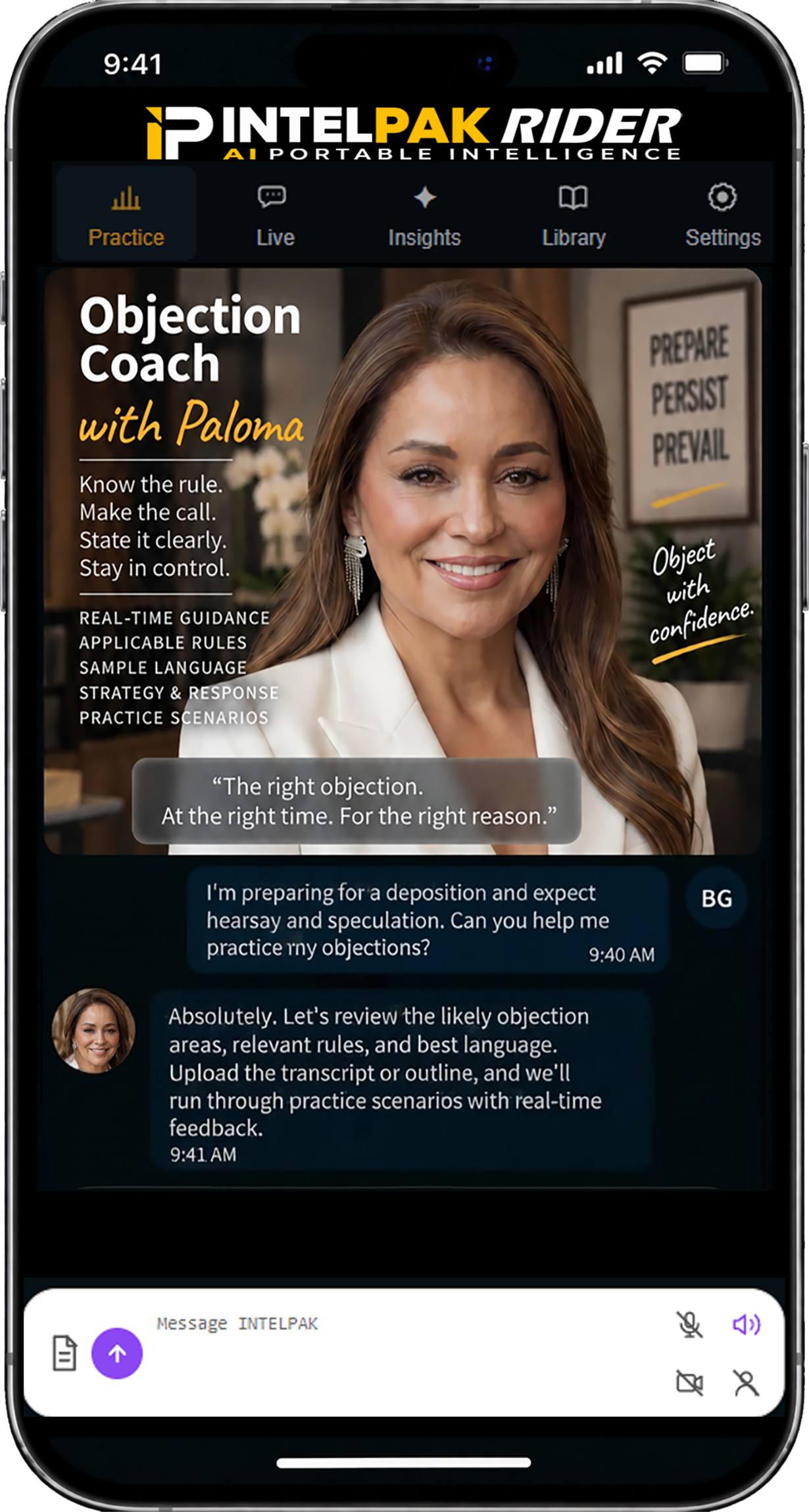
Recognize objectionable questions quickly, apply the right rule, and practice concise objections for hearings, depositions, and trial.

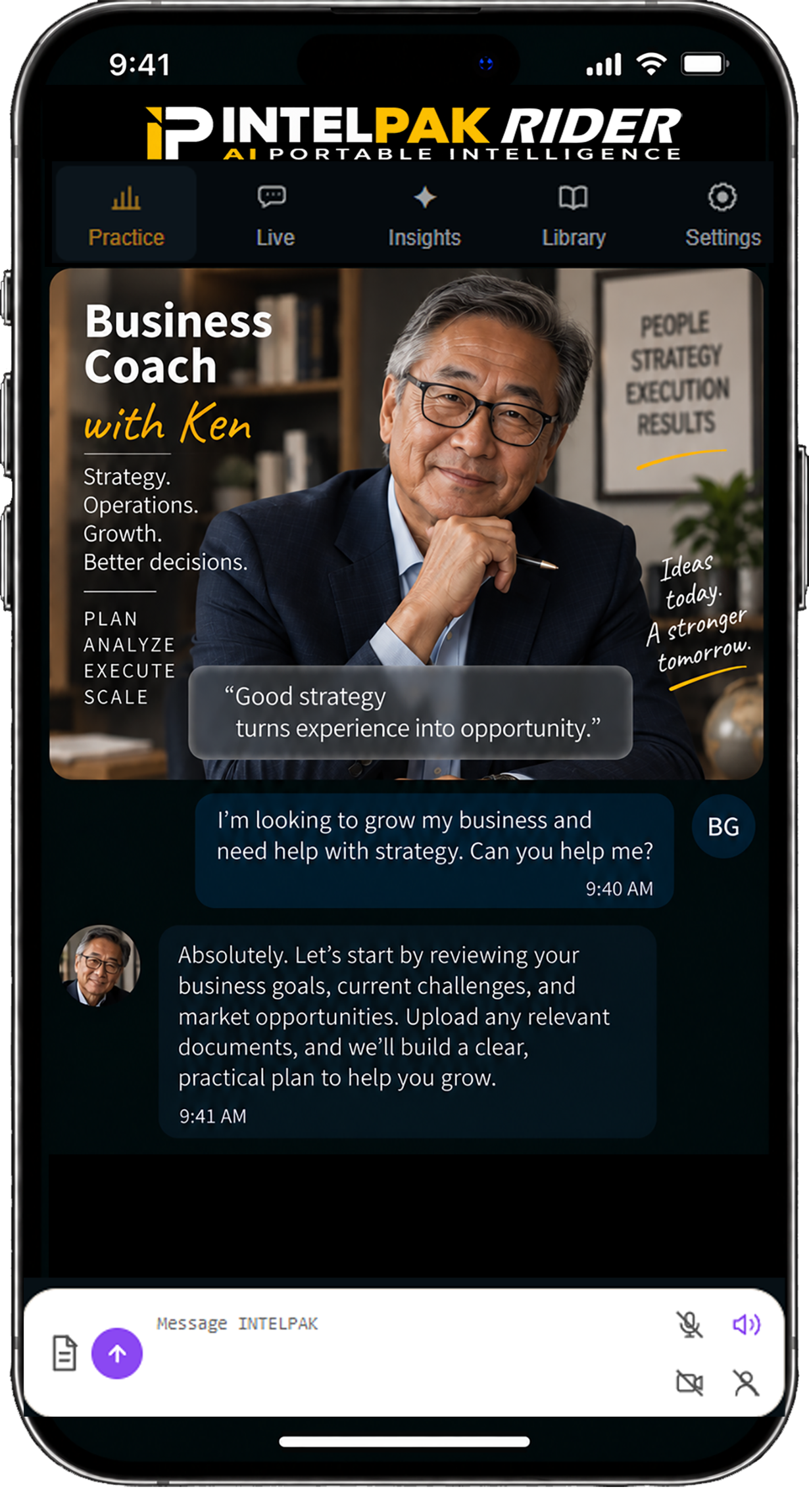
Turn business goals, operating challenges, and market opportunities into practical strategy, priorities, and execution plans.

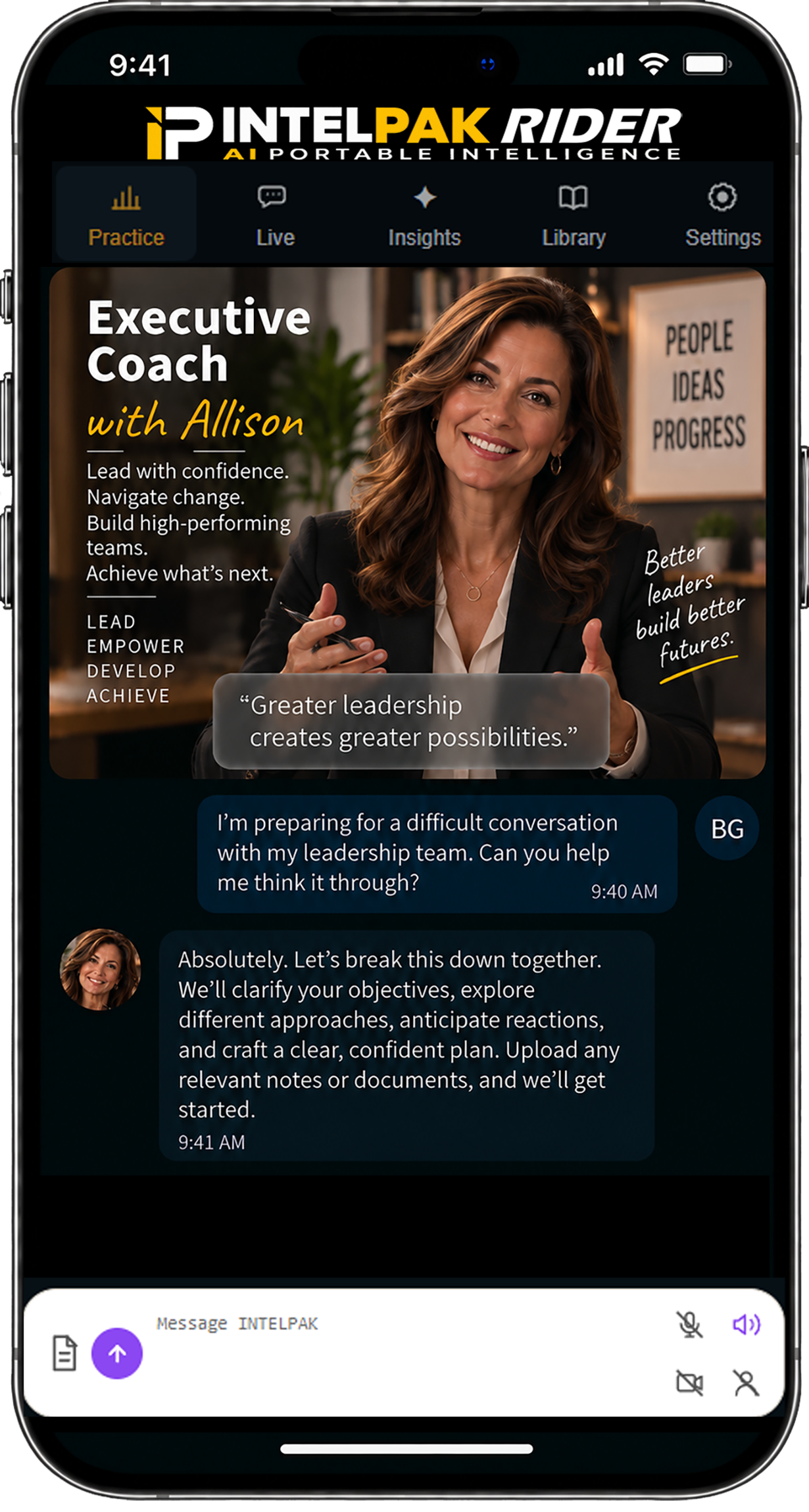
Work through high-stakes leadership decisions, organizational change, team dynamics, and difficult executive conversations.

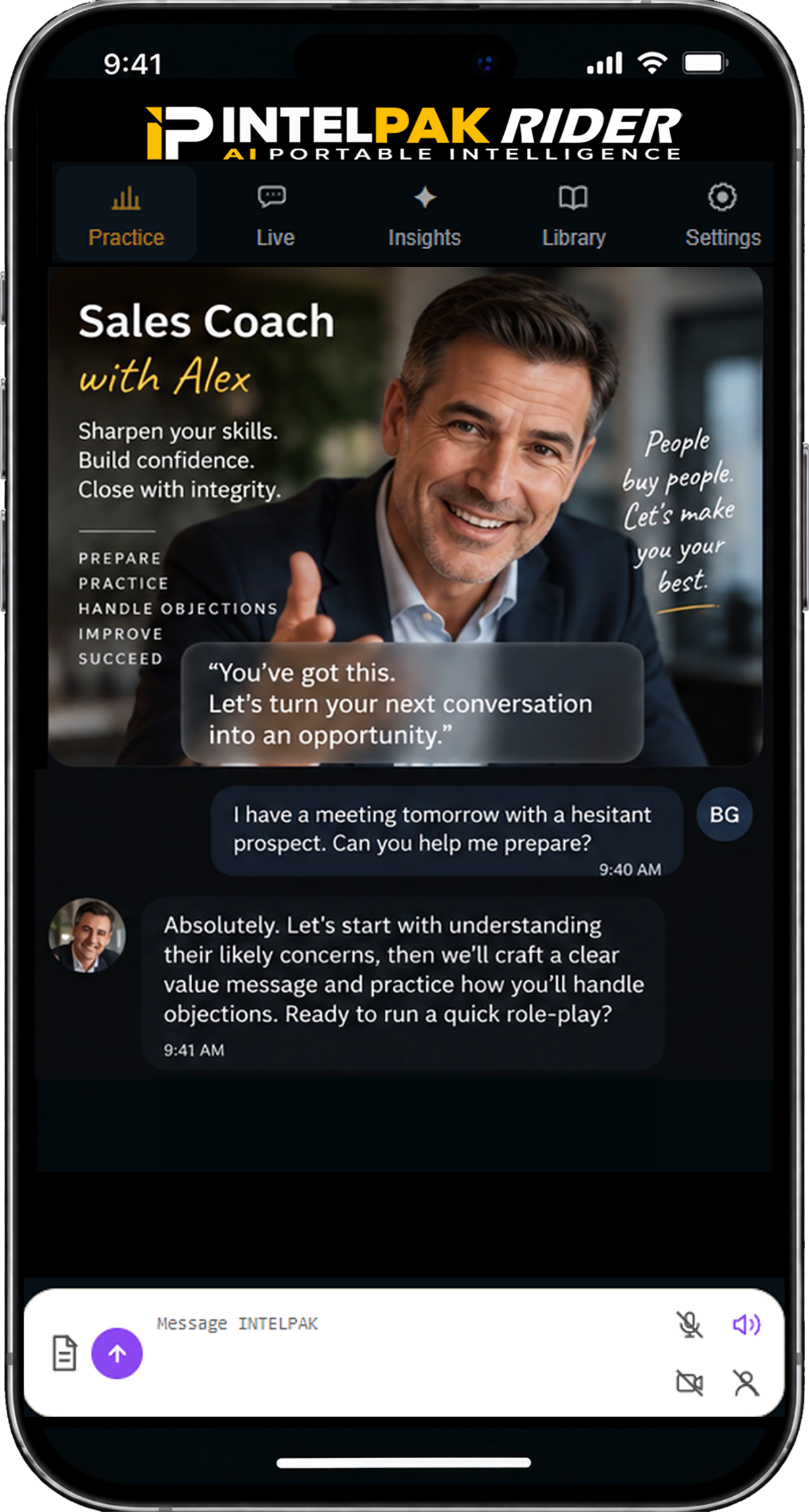
Practice real sales conversations, refine positioning, handle objections, and improve discovery, negotiation, and closing skills.

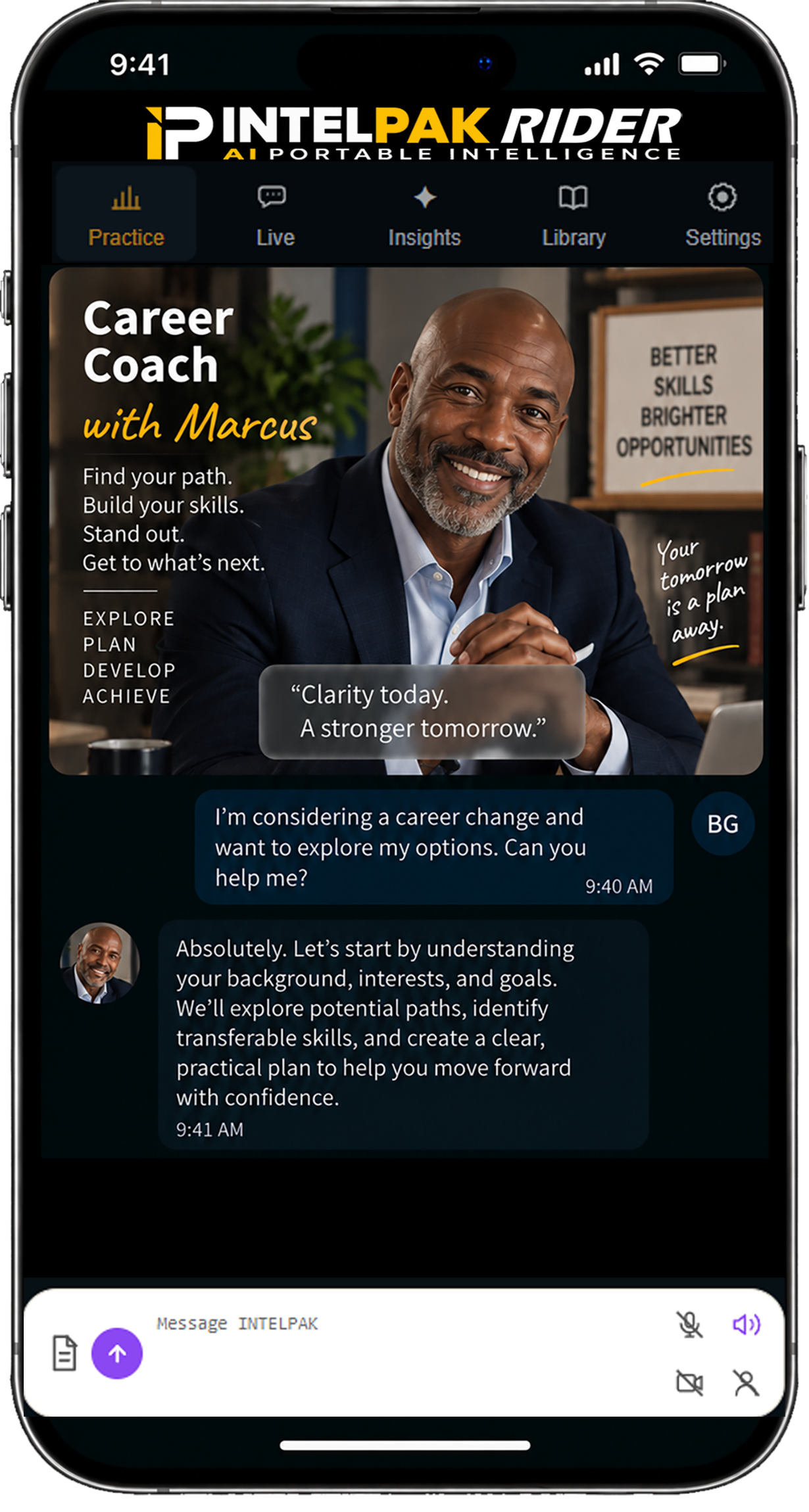
Explore career options, identify transferable strengths, evaluate opportunities, and turn professional goals into a concrete plan.

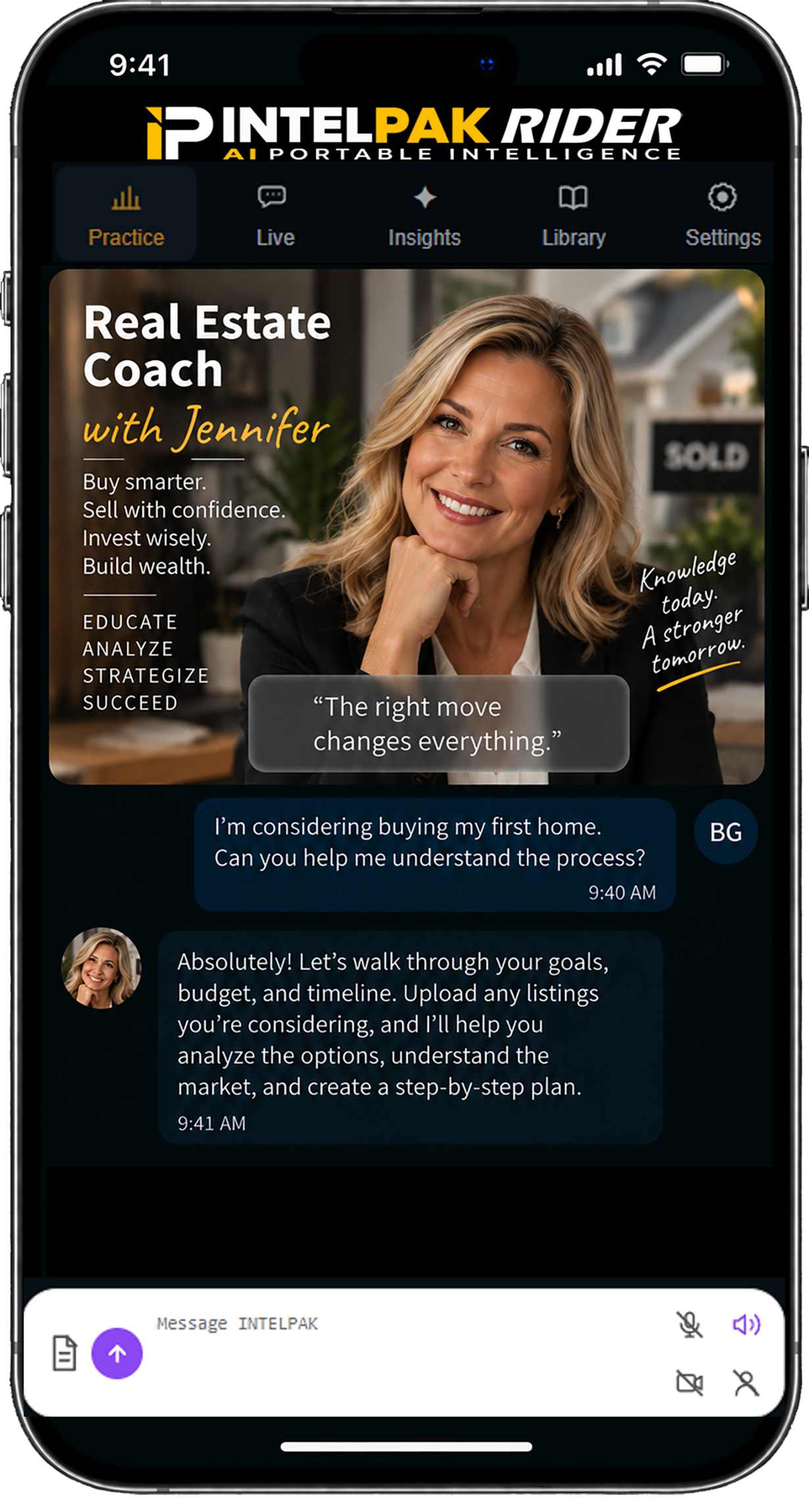
Prepare client conversations, property strategy, negotiations, and transaction decisions with practical real-estate guidance.

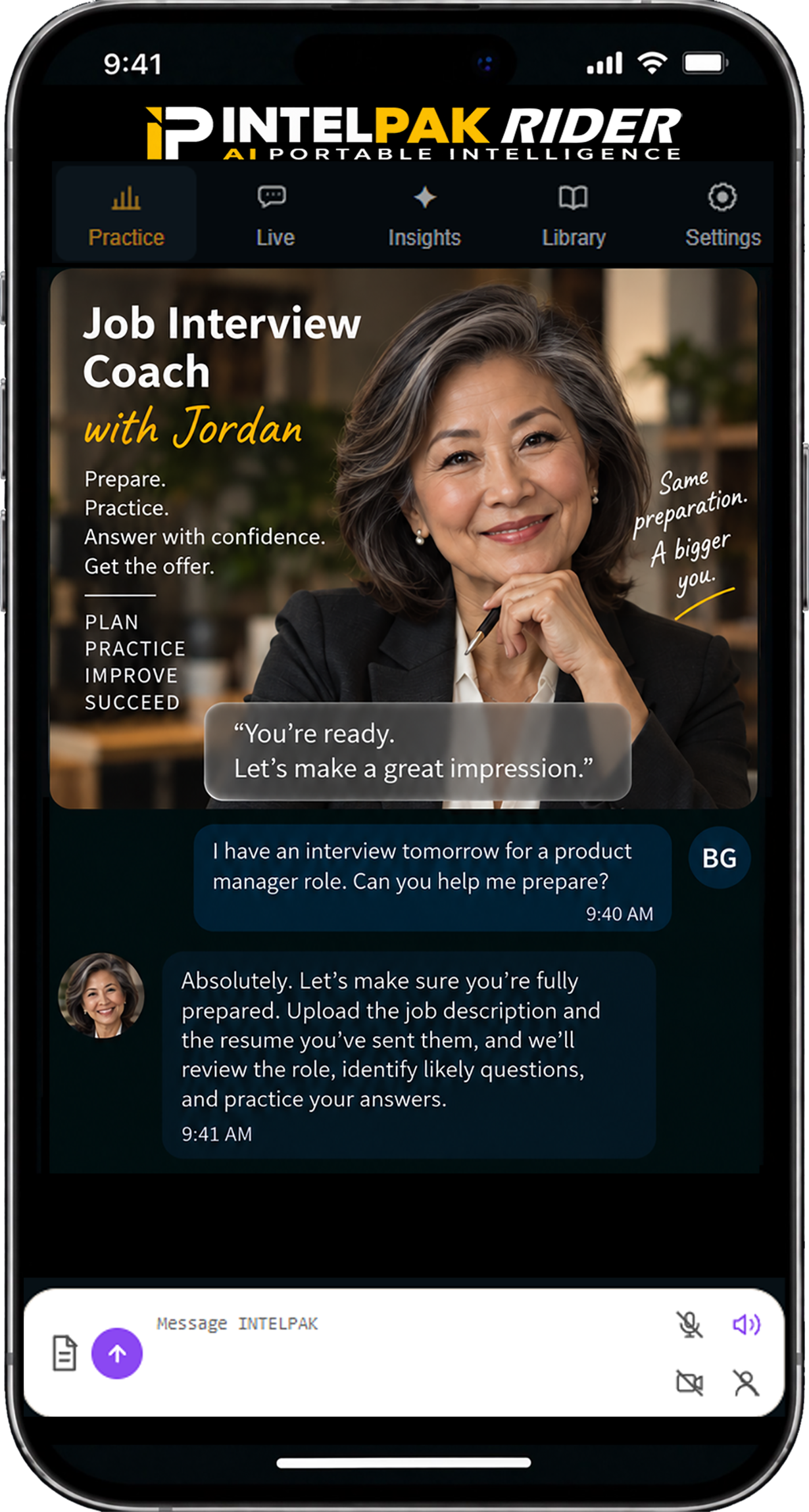
Use the actual job description and résumé to anticipate questions, strengthen answers, and rehearse for the interview that matters.

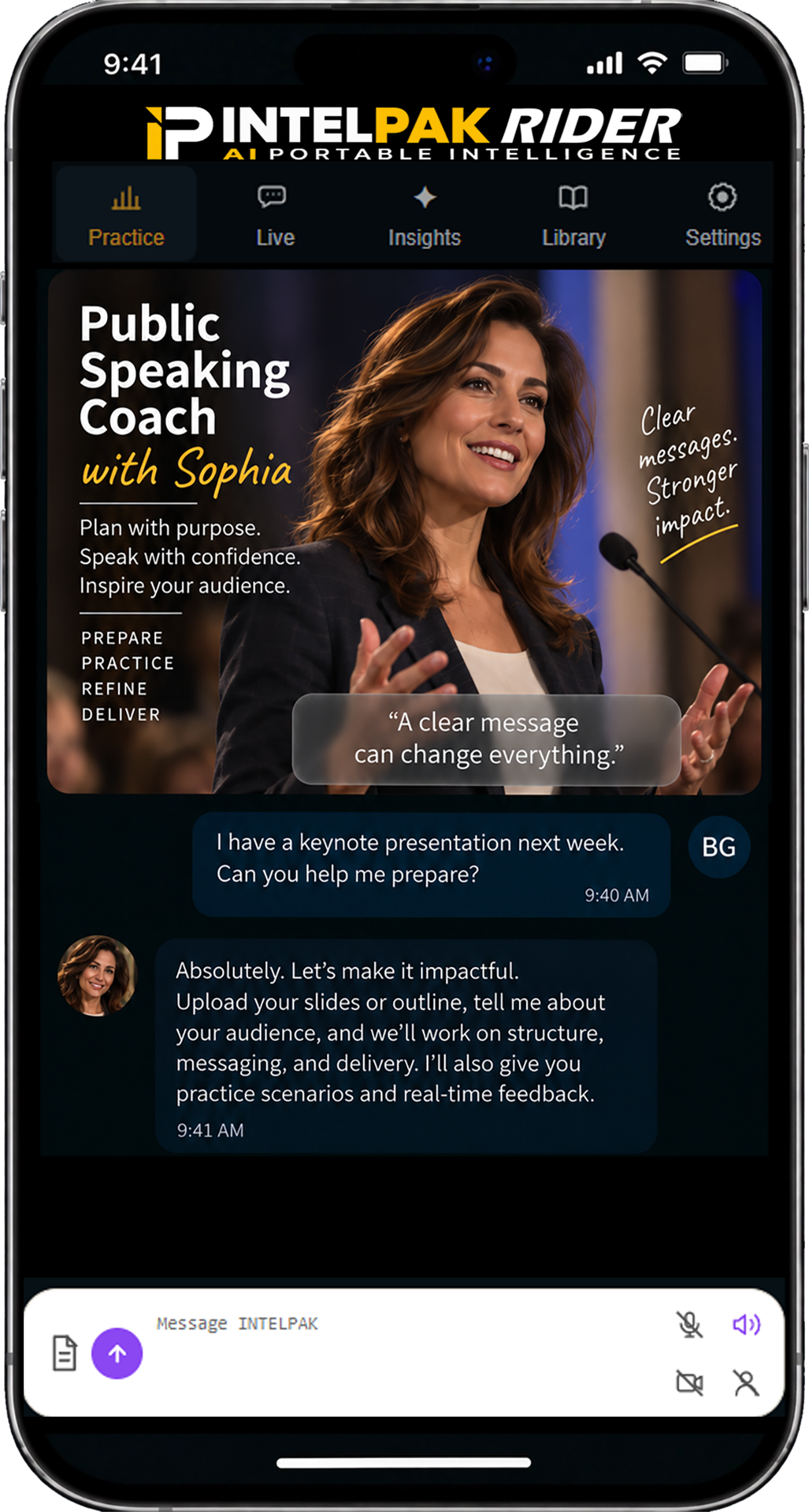
Shape stronger presentations, rehearse delivery, manage nerves, and communicate with confidence in front of any audience.

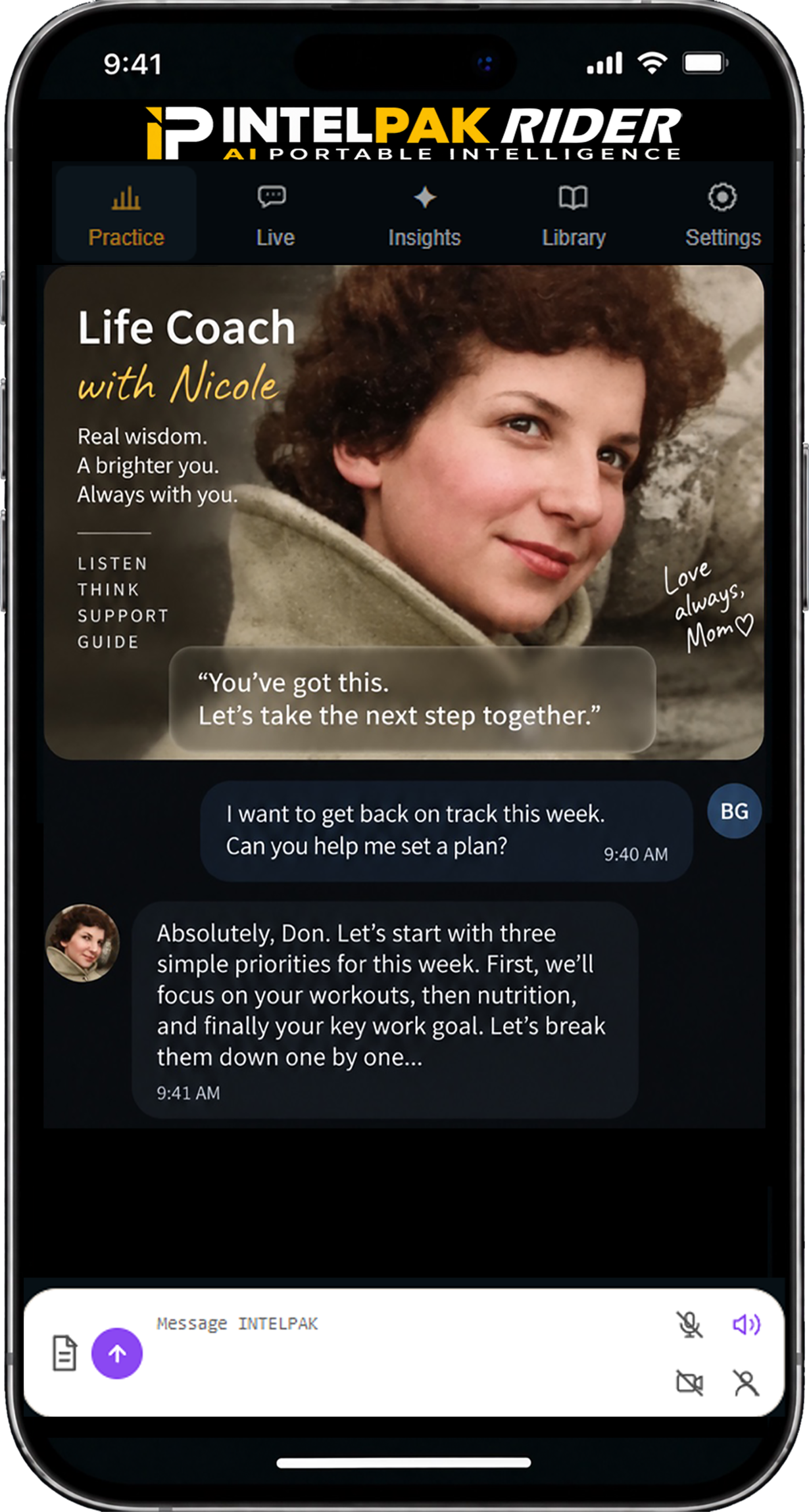
Clarify priorities, think through personal decisions, define meaningful goals, and turn reflection into practical next steps.

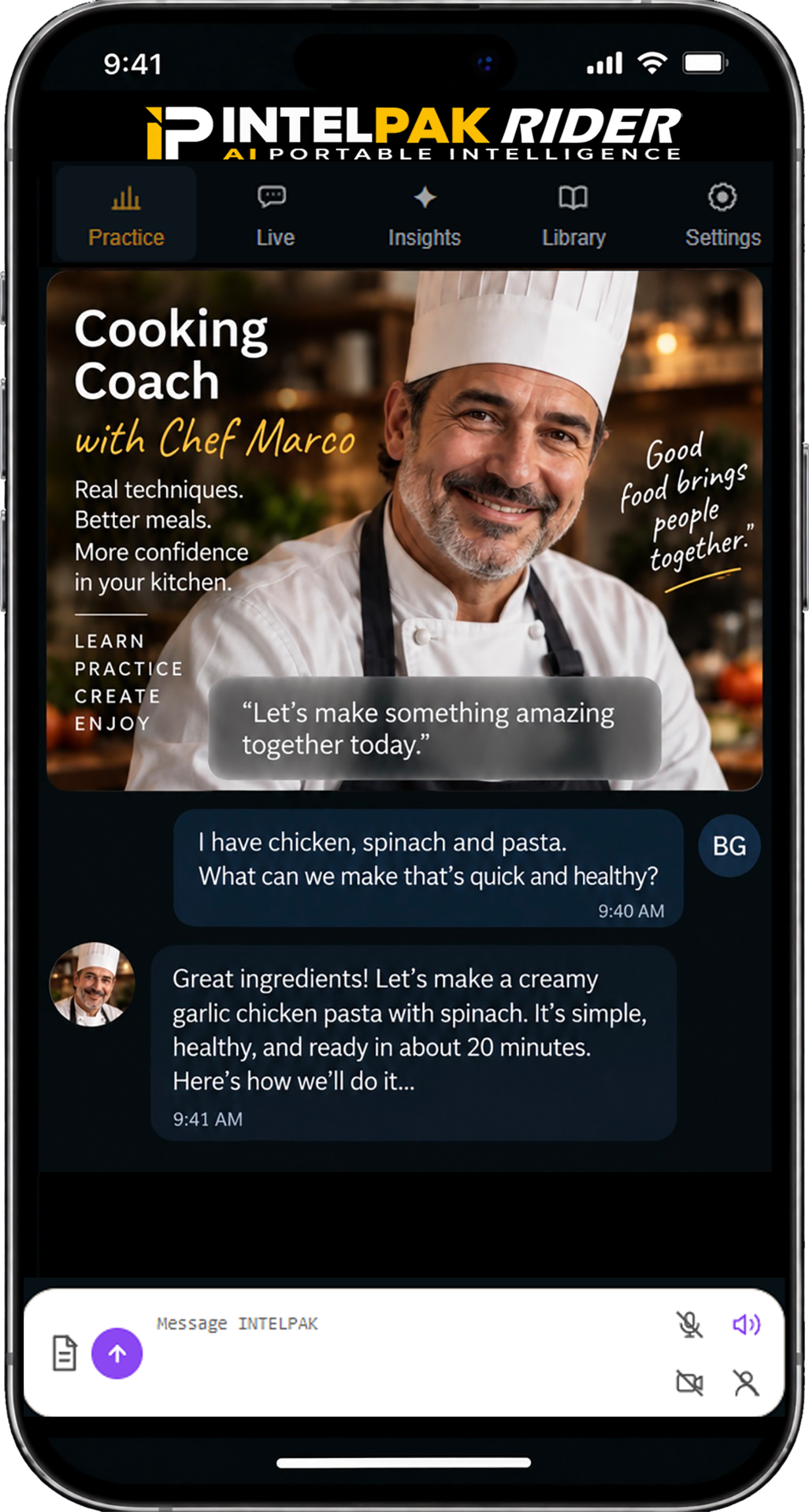
Cook interactively with guidance on ingredients, technique, timing, substitutions, and the recipes and skills you want to master.

Prepare for conversations, make sense of dating situations, and communicate with more clarity, confidence, and authenticity.

Give students age-appropriate conversational help with schoolwork, study habits, practice, comprehension, and academic confidence.
IntelPak separates expertise from the AI provider and from the device. That makes specialized intelligence reusable, governable, licensable, and exportable into other LLM environments.
Studio is where documents, playbooks, training, examples and expert judgment become Intelligence Packs. Your experts review what matters, approve it, and package it for use in Practice, Assist and supported AI environments.
IntelPak does not stop at its own runtime. LLM Export Adapters compile expert-reviewed knowledge into assets that Claude, ChatGPT Projects, Codex, Cursor, Windsurf, internal agents, and other LLM environments can ingest directly.
Build the intelligence once. Keep it. Move it. Use it as AI technology evolves.
IntelPak keeps your collective intelligence separate from the AI model and the device. Models will change. Interfaces will change. Your IPKs remain the portable intelligence you control.
Start with one body of expertise. Add another when you need it. Build for one person, one team or an entire organization without commissioning a giant AI system.